
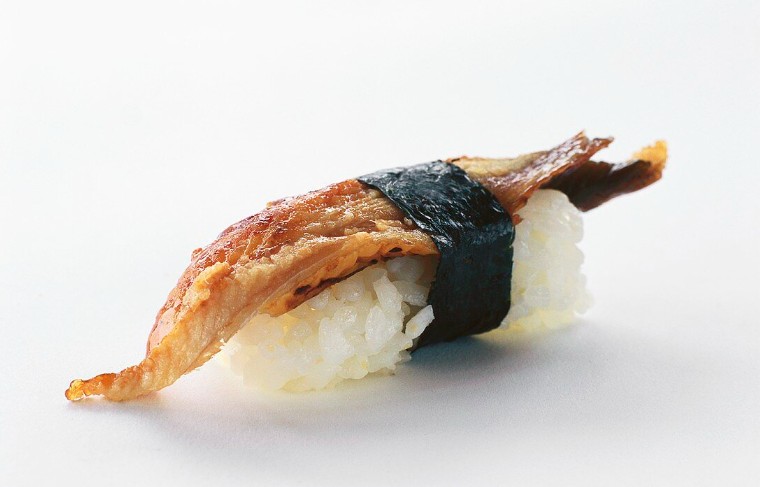
Anago sushi is prepared from anago eels (the generic name for Japanese saltwater eels of the conger family), which are usually cooked and brushed with a sweet glaze over vinegared rice. This style of sushi is highly traditional in Japan, particularly in Edo-style sushi-making.
What is Anago?
Anago means the saltwater eels of the Conger family (most commonly Conger myriaster); in contrast, unagi refers to freshwater eels. It is very delicate because, if properly cooked, its meat will dissolve in one’s mouth. Furthermore, anago’s meat is softer and less oily compared to that of unagi, and it has a very mild sweetness.
How is Anago Sushi Prepared?
- Cooked, never raw: Anago must always be cooked and is commonly simmered with seasonings to remove the slimy coating and tenderize the flesh.
- Tsume sauce: After cooking, some chefs coat the eel in sauce, a thick tsume made from sweet soy, to accompany the set of rice, creating a very deep savory-sweet note.
Anago can be served nigiri or pressed style.
Taste and Texture
- Texture: Very soft and tender, almost pulpy.
- Flavor: Milder but sweeter than the freshwater eel (unagi) with a lighter mouthfeel that elegantly enhances sushi rice and sauce.
Culture and Culinary Notes
Anago, the Edo-style sushi for centuries, has traditionally been considered a benchmark of sushi craftsmanship, as properly cooking eel requires a high level of skill. Most restaurants have their own closely guarded method for simmering and making tsume, each of which contributes to the unique style of that chef.
What Makes Anago So Special to a Sushi Chef?
Anago sushi is treasured by a great number of sushi chefs, standing out not only as merely another topping, but more importantly, as a true measure of that chef’s skill, orthodoxy, and craft in traditional Edomae (Edo-style) sushi. Why do chefs maintain such regard for it?
1. It Exhibits a Chef’s Technical Skills
Preparing anago (saltwater conger eel) is not simple, far from it. The eel is extremely slippery, and it has many tiny bones that must be cleanedly removed; otherwise, they will present unwelcome surprises in the finished sushi. After being lightly rubbed with salt to take off sliminess, the eel is simmered to allow its bones to either soften or dissolve and its flesh to be cooked tender, yet intact.
A very small mistake in the preparation or timing could ruin the texture; too soft, and it falls apart; too firm, and it doesn’t melt in your mouth. Because of this, to many sushi chefs, domestically and especially those trained in the traditional Edomae style, anago preparation is considered to be worthy of a true accomplishment.


2. Values on Tradition and History
Anago is one of the limited toppings in Edomae-style sushi from the early days of sushi in Tokyo (Edo) to date. Unlike raw sashimi, the preparation of anago requires cooking: simmering and finishing with tsume (a rich, reduced sweet soy sauce made from eel broth). The knowledge required to prepare and use tsume is a traditional skill passed down within the sushi world.
Because tsume is often made over the generations from the same stock, some chefs consider it a kind of house treasure, allowing it to acquire its own distinctive depth and character.
3. The Flavor Requires Delicacy
Anago is milder and more refined in flavor than its freshwater counterpart, unagi; not fatty or overpowering. With anago, a chef certainly cannot hide behind bold flavors; the precise preparation, seasoning, and sauce must enhance the subtle sweetness and texture of the eel.
Almost melting in the mouth when made well, that texture and balance can be achieved only through experience.
4. Quality Indicator
All this demand for techniques and precision:
Serving great anago sushi means one can trust the sushi chef and restaurant. Not being able to make anago well shows a lack of skill in many other traditional preparations, according to a consensus among the sushi masters.
5. A Taste of Classic Edomae
Traditionally, anago is served toward the end of an omakase meal. Its sweetness and richness help seal the satisfying treatment of much sharper, raw fish flavors. In Japan, diners expect anago as part of a thoughtful, classic sushi experience.
Why Sushi Chefs Serve Anago Sushi at the End of an Omakase?
Here’s why sushi chefs traditionally serve anago (saltwater eel) toward the end of an omakase sushi meal, and what it means in the context of the whole experience:
1. A Significant Entity of an Omakase Flavour Progression
In a normal sushi omakase, pieces are not served randomly; there is a definite sense of flow in taste and texture from lighter, richer, and more complex flavours.
From light, usually just palate-freshening kinds of fish, not-unbelievably delicately flavoured like whitefish or perhaps flounder, smooth clam, or shelled fish egg flushes to stronger or fattier seafood, yellowtail, fatty tuna, or sea urchin.
Toward the finish, traditionally you will often find uni (sea urchin), ikura (salmon roe), and anago (sea eel); these flavours are rich but not outrageously heavy, and you feel very content with their finishing.
Finally, the very last course in sushi is most probably tamago (sweet egg), which brings in a faint feeling of ending to the sushi before anything is served in the range of desserts or soup. Serving anago sushi towards the end of the foregoing mime helps the chef express anguish by starting with sublime and deeper savory tastes, with no interference with earlier lighter pieces.
2. Anago’s Preparedness Mixed in with Style and Texture, Clinging Toward the “Finale.”
Anago sushi offers a soft, tender, delicate texture, far lighter and much subtler than that of rich fatty fish like toro. Further, being cooked with sauce, it provides a warm and satisfying mouthful, which to me is a nice culinary transition between the raw focus of nigiri and the grand finale of the day. Just like tamago does at the end, it’s not raw fish but rather an expertly molded, comforting, somewhat sweet piece that kind of seals the deal on the experience.
3. Tradition and Balance
Omakase means literally, I will leave it up to you, trusting the chef with not just what one eats but when it is eaten. Chefs usually coordinate the omakase such that:
- One set of flavours does not overpower another.
- Textures develop in pleasing order.
- The last pieces give a sense of closure and satisfaction.
This explains the placing of cooked items, such as anago, toward the latter end; it kind of rounds out this progression from something raw to something seasonal and light to something more looming.

Final Thoughts
Chefs serve anago sushi towards the end of an omakase meal because it fits the taste progression from light to rich. Its tender, cooked texture provides a satisfying wrap-up after raw nigiri, hence exemplifying the thoughtful sequencing that separates omakase from an à la carte menu order.
Book your next omakase atSushi Inc. in Downtown St. Petersburg and let our chefs take you through an unforgettable flavour progression if you intend to have this last dish served exactly on time!


